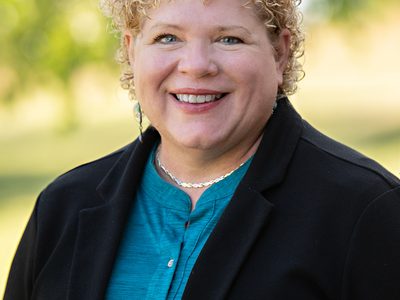
In Warroad, mornings start early at Bobbie Jo O’Loughlin’s home, where she has cared for children and families for more than 35 years. Boots come off by the door. Backpacks line up. Some kids run in. Others need a quiet moment and a familiar voice. Over time, her home has become a steady place for families in the community.
She has cared for generations of families. The children she once watched are now parents themselves, dropping off their own kids at the same home. In a small town, that kind of trust runs deep. It helps parents get to work. It gives families peace of mind. It keeps daily life moving.
But even steady places can be at risk.
When a repair becomes a turning point
The wooden deck attached to Bobbie Jo’s home had begun to deteriorate. It served as an emergency exit and needed to meet safety requirements. Without it, her license was at risk. Fixing it was urgent. It was also expensive.
Like many family child care providers, Bobbie Jo runs a small, self-employed business. There is no extra money set aside for major repairs. She applied for a small emergency grant, but it did not cover the full cost. She put part of the expense on a credit card while trying to figure out the rest. Winter was coming. Time was short.
Across the region, situations like this are common.
“We kept seeing providers facing big, necessary repairs with no real way to pay for them,” said Katie Gunderson of Northwest Minnesota Foundation (NMF). “These are not optional fixes. They are what allow providers to stay licensed and open.”
Filling a gap for those already doing the work
For years, NMF supported new providers through startup funding. But staff saw a different need emerging.
Longtime providers were struggling to stay open.
“There is a lot of focus on getting new providers into the field,” Gunderson said. “But we also need to support the people who have been doing this work for decades.”
That led to the creation of the Child Care Retain Forgivable Loan. Using one-time funding secured for this purpose, the program helped established providers make critical repairs and improvements needed to continue to operate safely. NMF hopes to offer similar opportunities in the future as funding becomes available.
Bobbie Jo was one of the first to receive support. The $2,950 loan allowed her to replace the deck, restore a safe exit, and meet licensing requirements without taking on long-term financial strain.
More than one provider
That repair did more than fix a structure. It meant children could keep coming to a place they know. It meant parents could keep working. It meant one experienced provider stayed in a field that needed her.
In communities like Warroad, that matters.
“These providers are part of the fabric of the town,” Gunderson said.
When a door closes
When a provider closes, families feel it immediately. Parents scramble to find care. Some reduce their hours or leave jobs. Employers struggle to fill shifts. In rural areas, there are often few alternatives.
“It can create panic for families,” Gunderson said. “And it has a ripple effect across the whole community.”
Child care providers are often a child’s first teacher outside the home. They shape early learning, support working families, and help communities function day to day.
Keeping the doors open
With her deck repaired, Bobbie Jo continues to open her doors each morning.
The Retain Forgivable Loan is still new, but it is already helping providers across the region stay open, safe, and supported.
Sometimes, that support looks simple—a deck, a furnace, a kitchen.
But for the families who rely on it, and the communities built around it, it means everything.